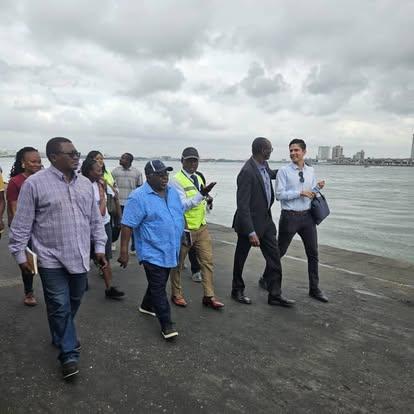
Urban Drainage Planning
Functioning, well-maintained drainage infrastructure as the first line of defense against seasonal flooding.
Four years building Ogun State's first Ministry of Environment from the ground up (2003–2007).
Ogun State's Ministry of Environment was established in 2003, taking over environmental management responsibilities previously handled by other state agencies. Tony Ojeshina was appointed as the ministry's pioneer Commissioner for Environment under the administration of Governor Gbenga Daniel, a post he held for four years, from 2003 to 2007. Though reconfirmed for a second term, he chose not to accept it given the demand for his consulting services from multinational oil companies, multilateral organizations, and funding agencies.
As pioneer Commissioner, he was responsible for establishing the new ministry and its structure from scratch — developing and defending before the State Legislature the law that established it, and writing the guidelines, rules, and regulations that governed it.
In public commentary since, Ojeshina has pointed to poor urban planning, blocked drainage systems, indiscriminate refuse disposal, and weak enforcement of environmental regulation — alongside broader climate change — as the drivers of avoidable flood damage in Nigerian communities.
Most flooding in Nigeria is largely man-made. God created the Earth perfectly, but human activities and our failure to do what is necessary have created these environmental problems. Governments should not wait until disasters occur before taking action.
Platform Times, July 2026
Functioning, well-maintained drainage infrastructure as the first line of defense against seasonal flooding.
Disciplined refuse disposal and stronger enforcement of existing environmental regulation.
Addressing poor urban planning as a root cause of avoidable flood damage in fast-growing communities.